














With Ferry Strikes, Ukraine Narrows Russia's Options at Kerch Strait
Ukraine has launched attacks on two railway ferries that Russia was using to supplement its rail line from the Russian mainland across the Kerch Strait Bridge to Crimea.
In the attack, the 150-meter ro/ro rail/vehicle carrier Slavyanin (IMO: 8300169) was disabled and the 125-meter Avangard (IMO 9522403) was damaged. Rendering these two vessels unfit for sailing now means that Russian has no rail ferries left in service on the Black Sea.
From imagery released by the Ukrainian Military Intelligence organization HUR, it appears that both attacks took place at sea. HUR did not reveal what strike method was used, and it is difficult to ascertain from the imagery released whether the Russian vessels were attacked by aerial or sea drones, although the HUR has tended to employ sea drones in this type of attack.
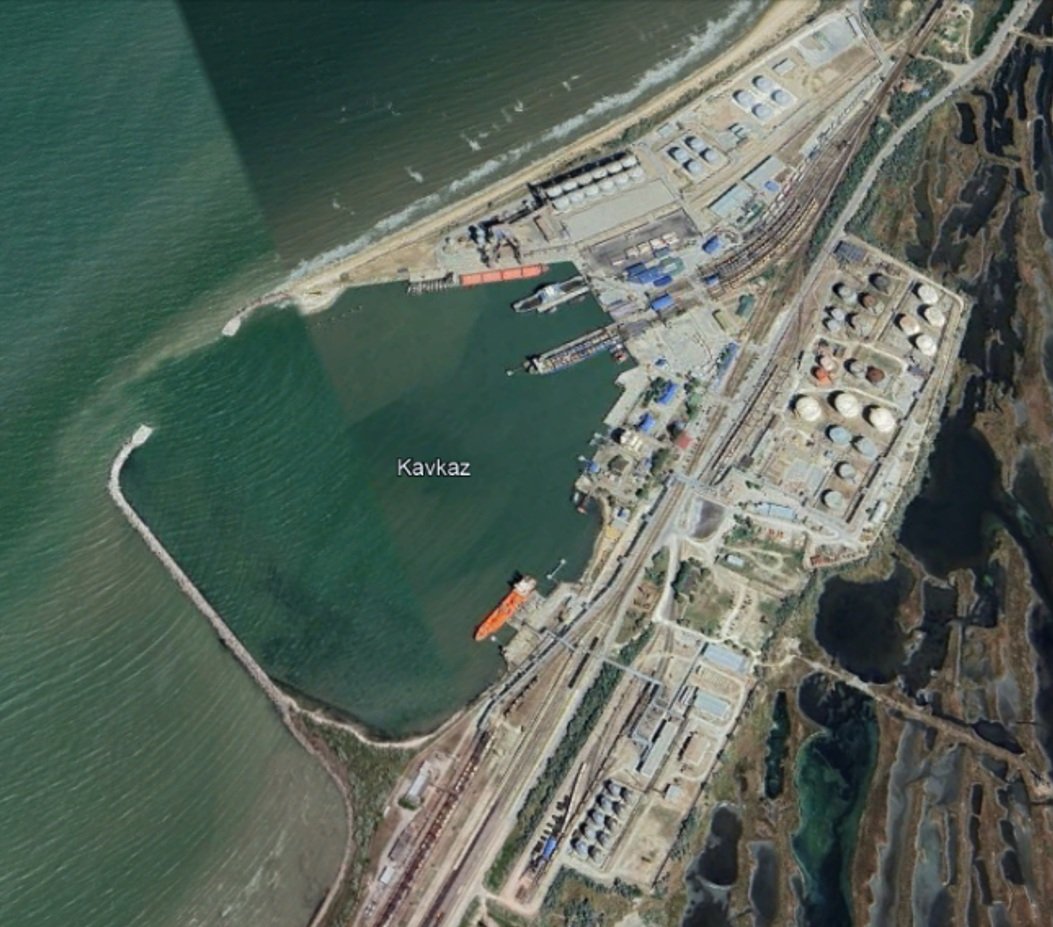
A busy Kavkaz ferry port in 2023, with two rail ferries docked (Google Earth/Landsat/Copernicus)
At the same time as the vessels were hit, the Ukrainians also attacked the port of Kavkaz, the rail and car ferry terminus in Krasnodar on the Russia mainland.
The terminus on the Crimean side is a short nine nm voyage away. When there were sufficient ferries, the port at Kavkaz was also used to serve rail ferries sailing to Samsun in Turkey, thereby avoiding transits through Georgia.
Russia has for some time now sent flammable and explosive rail cargoes across the Kerch Strait using rail ferries. It is unclear whether it has done so in order to reduce the risk of Ukraine targeting the bridge when an explosive or flammable goods train is crossing. Ukraine has pulled off such an attack before, with the subsequent fire of oil wagons causing secondary damage. It is also possible that a previous attack may have weakened the bridge structure so much that oil wagon trains are now too heavy for the calculated load-bearing classification of the railway bridge. In either case, Russia may now have no choice but to make further use of the Kerch Bridge, which is the only available rail route into Crimea from Krasnodar.
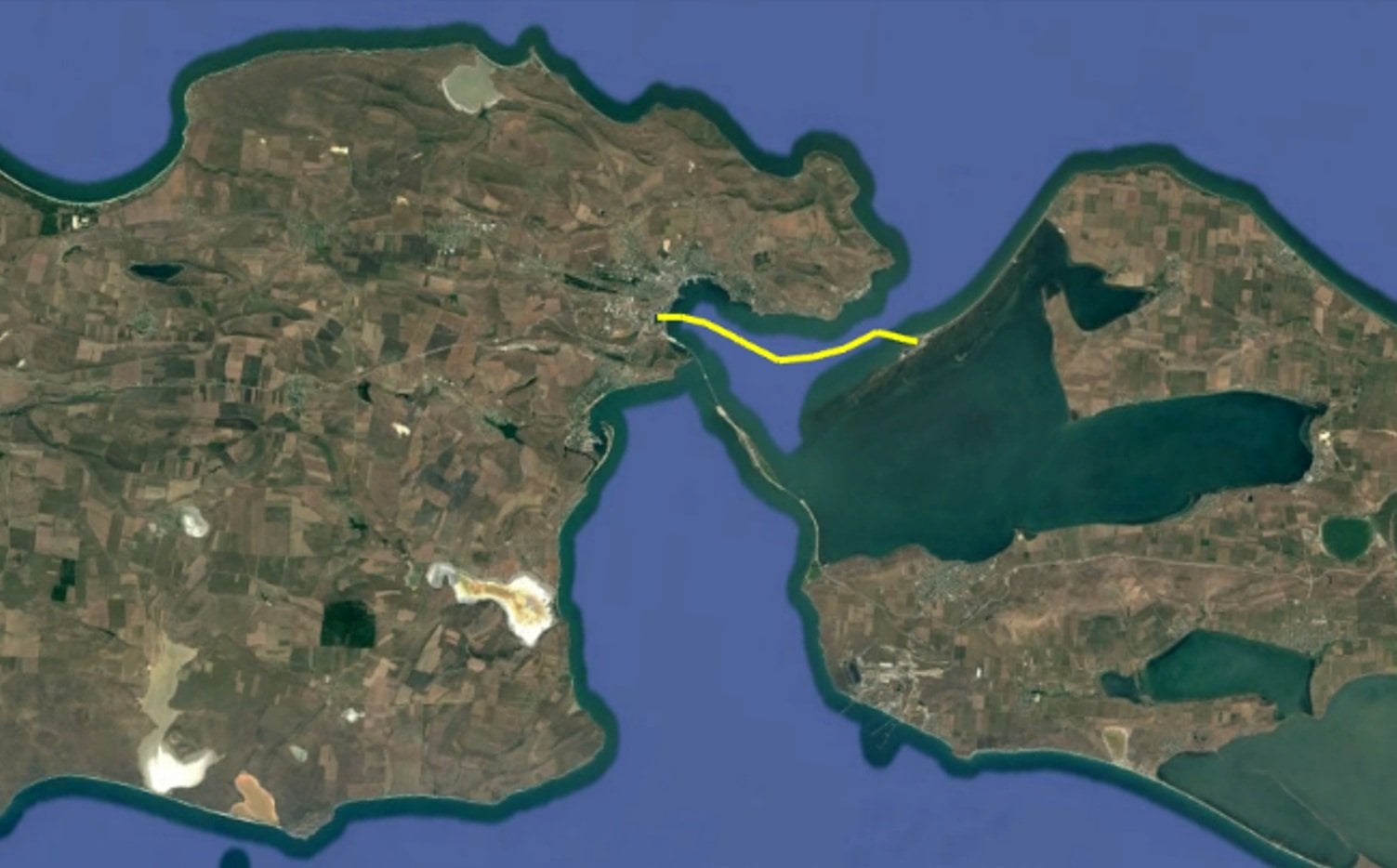
The Kerch-Kavkaz ferry route in yellow, to the north of the Kerch Strait Bridge (Google Earth/CJRC)

that matters most
Get the latest maritime news delivered to your inbox daily.
What makes the situation worse for the Russians is that rail routes to Crimea and the Russian front line in the Kherson region, which have been constructed as a fall-back along the Sea of Azov coastline through Mariupol and Melitopol, are becoming increasingly vulnerable to Ukrainian drone attack. Ukraine has been steadily increasing the depth of its “drone zone,” an area beyond the front line stretching deep into Russian-held territory in which most tactical movement is detected by a constant drone presence overhead and then attacked.
The Ukrainian’s next move is likely to be yet another attack on the Kerch Bridge itself, now that it has become the critical remaining link over which the Crimea can be supported by bulk heavy rail traffic from Russian territory. As an alternative to rail traffic for bulk goods, the Russians are still using coastal vessels to support their forces in Crimea, but these are vulnerable to Ukrainian sea drone attack.
Content Original Link:
" target="_blank">