









TME Launches Cruise Executive to Follow Dynamic Industry Trends
Welcome to the first edition of a new monthly newsletter from The Maritime Executive called Cruise Executive. With the cruise segment growing at a dramatic pace, we will follow the business trends and news in the cruise industry, its partners and suppliers, and the ports serving the cruise ships.
The modern cruise industry has emerged over the past 40 years after a handful of entrepreneurs built the foundations of the business starting in the 1950s and 1960s. Today, the cruise lines have evolved into multibillion-dollar corporations competing with resorts and theme parks in the leisure travel segment.
While relatively small by number of ships compared to the larger commercial segments, including container shipping, dry bulk, or tankers, cruising nonetheless is one of the most dynamic. The corporations are making large financial investments in new tonnage as well as working with local governments in the development of new destinations. The ships are also at the forefront of trends and in the adoption of new technologies, including addressing greenhouse gas emissions.
The industry trade group CLIA (Cruise Lines International Association) points out that cruise tourism generated $198 billion in global economic impact in 2024 and contributed $60 billion in wages. Last year, CLIA’s members (about 90 percent of the industry) topped 37 million passengers, which is impressive when you consider that 40 years ago, in the nascent days of cruising, the industry carried 1.9 million passengers in 1985. Last year’s 2.8 million increase in passengers was the same as the number of people the industry served in 1987.
Despite economic, societal, and geopolitical challenges, cruising continues to demonstrate resiliency. It strongly rebounded following the COVID-19 pandemic, has learned to deal with challenges such as the recurrent outbreaks of norovirus, and avoided a deeper impact from the recent hantavirus outbreak on an expedition cruise ship that made worldwide headlines. In times of economic challenges, cruising emphasizes its value proposition compared to other forms of vacations.
Cruising grew at 7.5 percent in 2025, with CLIA forecasting 38.3 million people will cruise in 2026, and it will top 40 million passengers the following year. By the end of the decade, more than 42 million people will be taking cruise vacations each year. The fastest-growing segments of cruising are expedition and ultra-luxury. River cruising is also enjoying strong growth and a surge in newbuilds.
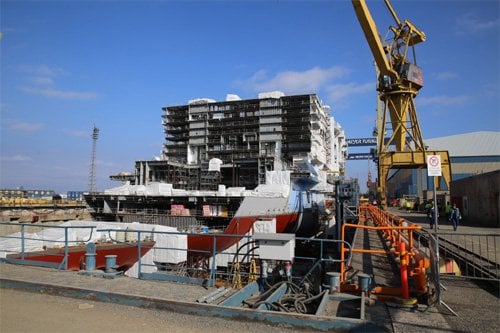
Cruise industry has nearly $100 billion in new ship orders stretching until 2039 (Meyer Turku)
While shipbuilding is setting records with the number of containerships on order, the cruise ship orderbook is equally dramatic, especially when you consider it is dominated by four corporations (Fincantieri, Meyer Werft, Meyer Turku, and Chantiers de l’Atlantique). With the latest orders placed by Carnival Corporation for its Princess Cruises brand, the industry has scheduled deliveries until 2039, although the bulk of the current orders will be delivered by 2032. Mary Bond of Informa Markets (the organizers of the Seatrade Cruise) highlights that the value of the order book is poised to surpass $100 billion.
Bud Darr, President and CEO of CLIA, points out that his organization encompasses about 325 cruise ships out of more than 60,000 commercial ships globally. Cruising currently represents about 29 million gross tons and has more than 730,000 berths. The orderbook equates to 25 percent of the current number of ships, although undoubtedly some of the older ones in service will be retired. By gross tonnage, the orderbook represents 36 percent of the current fleet, and by berths, 32 percent.
Cruising is at the forefront of sustainability, as many in the industry point out that, unlike commercial shipping, which docks in industrial ports, cruise ships are often downtown, making them a visible symbol of shipping. The first LNG-fueled cruise ship (AIDAnova) was introduced in late 2018, and today, there are around 30 LNG-fueled cruise ships in operation, and about half the current orderbook (by number of ships) is for LNG-fueled cruise ships. The lines have incorporated solar and fuel cells into new ships, started testing batteries, and the first methanol-ready cruise ships are in service. The first hydrogen-fueled cruise ship (Viking Libra) is scheduled for delivery by the end of the year. Bud Darr predicts, longer term, the cruise industry will migrate to methane and methanol, while pointing out that a lack of supply and infrastructure are the hurdles to adoption.

that matters most
Get the latest maritime news delivered to your inbox daily.
The corporations are spending billions of dollars developing new destinations and working with countries to develop ports and infrastructure. While there is a persistent concern about overtourism, the industry also finds new geographic regions anxious to attract cruise ships and the economic contribution they represent.
We invite you to join us as we focus on the business of cruising and explore developments in the industry. We appreciate your interest and welcome your input as we launch Cruise Executive ([email protected]).
Content Original Link:
" target="_blank">


