






Singapore-based project to tackle one of energy transition's 'hardest engineering challenges'
A new industry-academia research collaboration project, led by the National University of Singapore’s Centre for Hydrogen Innovations (CHI), has been launched with a focus on the development of next-generation ammonia-fuelled marine engines with near-zero emissions to help in speeding up the decarbonization of the global shipping industry.
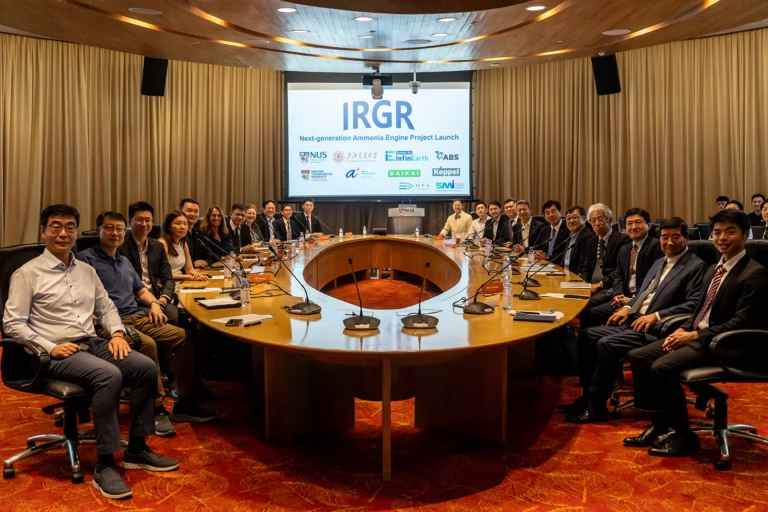
Officially launched on February 4, the project focuses on a novel in-cylinder reforming gas recirculation (IRGR) engine concept designed to address key limitations that have so far constrained the wider adoption of ammonia as a marine fuel.
The project, with funding support from the Singapore Maritime Institute (SMI), includes partners from Shanghai Jiao Tong University, Nanyang Technological University, the A*STAR National Metrology Centre and Keppel Energy Nexus, alongside industry partners Daihatsu and the American Bureau of Shipping (ABS).
The launch event also saw the formal signing of research collaboration agreements between NUS and Daihatsu, and between NUS and ABS.
“Ammonia has been recognised as one of the most promising fuels for achieving near-zero greenhouse gas emissions in marine transportation, but current ammonia engines face significant challenges in efficiency and
Content Original Link:
" target="_blank">