








The Mediterranean coastline faces significant ecological and economic challenges. The Gulf of Lion, which has been studied for erosion and flooding risks for over 15 years, exemplifies these issues. The reduced sediment
The Mediterranean coastline faces significant ecological and economic challenges. The Gulf of Lion, which has been studied for erosion and flooding risks for over 15 years, exemplifies these issues. The reduced sediment supply from rivers—including the Rhône—flowing into the gulf has intensified coastal erosion, a problem further exacerbated by climate change.
The increasing frequency and intensity of storms have accelerated beach erosion. Artificial structures built to mitigate this phenomenon, such as rock groynes and breakwaters installed since the 1970s, have often reached their limits. While these structures have helped stabilize sandbanks locally, they degrade over time and prevent the natural regeneration of beaches.
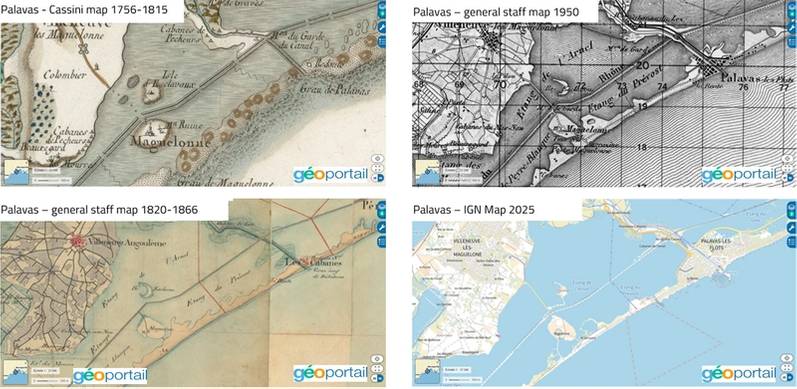 Palavas-les-flots though the age in 4 official maps © Geoportail
In the 2010s, significant beach replenishment projects were undertaken using dredgers. These efforts, costing millions of euros, were intended to provide sand for several years or even decades, according to local stakeholders. However, the effects of storms quickly undermined these projections, reducing their effectiveness to less than five years.
The SURFREEF Project
The Lineup Ocean team has extensively studied the processes affecting Mediterranean coasts. With the SURFREEF project, they are testing a new generation of submerged structures designed to limit coastal erosion. Inspired by the natural mechanisms of
Content Original Link:
" target="_blank">